
Introduction
In 2026, two significant lunar-based celebrations — Ramadan and Chinese New Year — occur at nearly the same time. This rare overlap offers a moment to explore how these two traditions, rooted in lunar observation and cultural meaning, coincide and what it means for people around the world, including millions in China.
1. Shared Lunar Roots: Similarity in How Dates Are Determined
Both Ramadan and Chinese New Year are tied to the cycles of the moon, but through different lunar calendars.
- Ramadan is the ninth month of the Islamic calendar, which is a purely lunar calendar. Its start is determined by the sighting of the new crescent moon each year.
- Chinese New Year is based on the traditional Chinese lunisolar calendar, which also uses moon phases but adjusts with solar seasons to align the year with seasonal cycles.
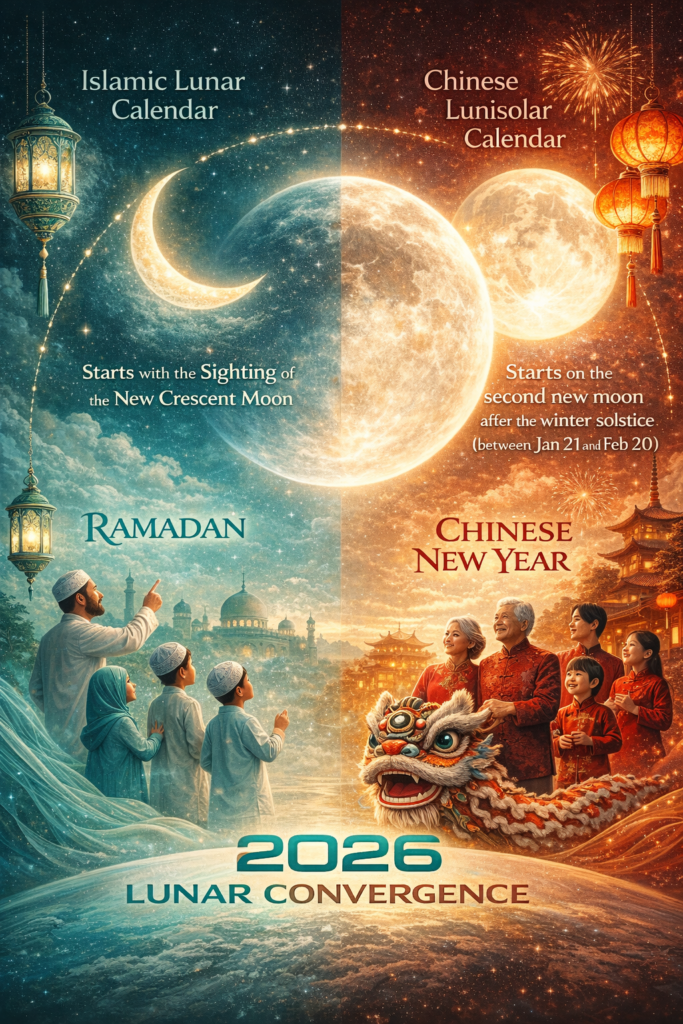
Because both celebrations depend on moon cycles instead of the Gregorian solar calendar, their dates shift annually and can occasionally come close together — as they do in 2026. This shared lunar foundation is the underlying reason that makes such a coincidence possible.
2. A Rare Overlap: Coinciding Dates in 2026
In 2026, Chinese New Year falls on February 17 and Ramadan begins at sunset on February 17/18, due to the sighting of the crescent moon.
This overlap of dates is very rare. According to multiple sources, the conjunction of Ramadan, Chinese New Year (and even Lent) in such a narrow window hasn’t occurred in many centuries — some reports suggest a situation like this has not occurred since 1863.
There are no reliable records of exactly how many times this coincidence has happened in history, but what is clear is that the alignment of these lunar observances within a single short period is an uncommon event due to the independent nature of the calendars involved.
3. Millions Celebrating: Muslim Community in China & Traditions
Muslim Population in China
China is home to a significant Muslim minority. Official statistics indicate that there are at least ≈18 million Muslims in the country, recognized across several regions and ethnic groups, such as the Hui and Uyghur communities.
Ramadan Traditions
During Ramadan, Muslims observe a month of fasting from dawn to sunset, engage in extra prayers (Tarawih), focus on spiritual reflection, and increase charitable actions. Families and communities often gather to break fast together at iftar, and pre-dawn meals (suhoor) are shared before the daily fast begins.
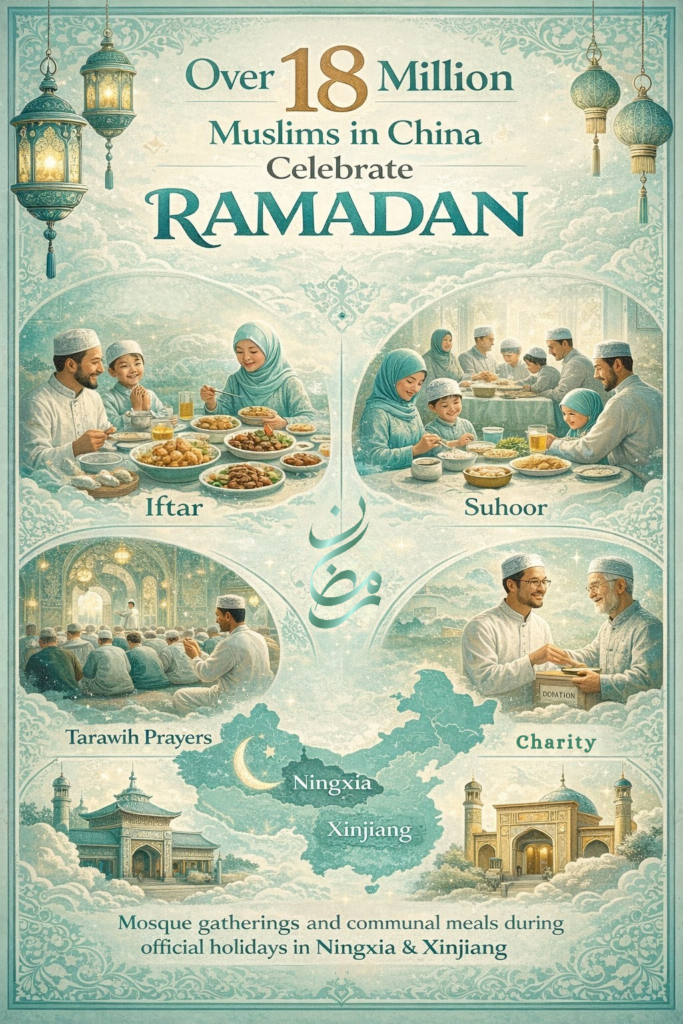
In China, these practices are observed by Muslim communities through mosque gatherings, communal meals, and evening prayers. In some provinces such as Ningxia and Xinjiang, Ramadan is recognized with official holidays and strong cultural acknowledgment.
Chinese New Year Traditions
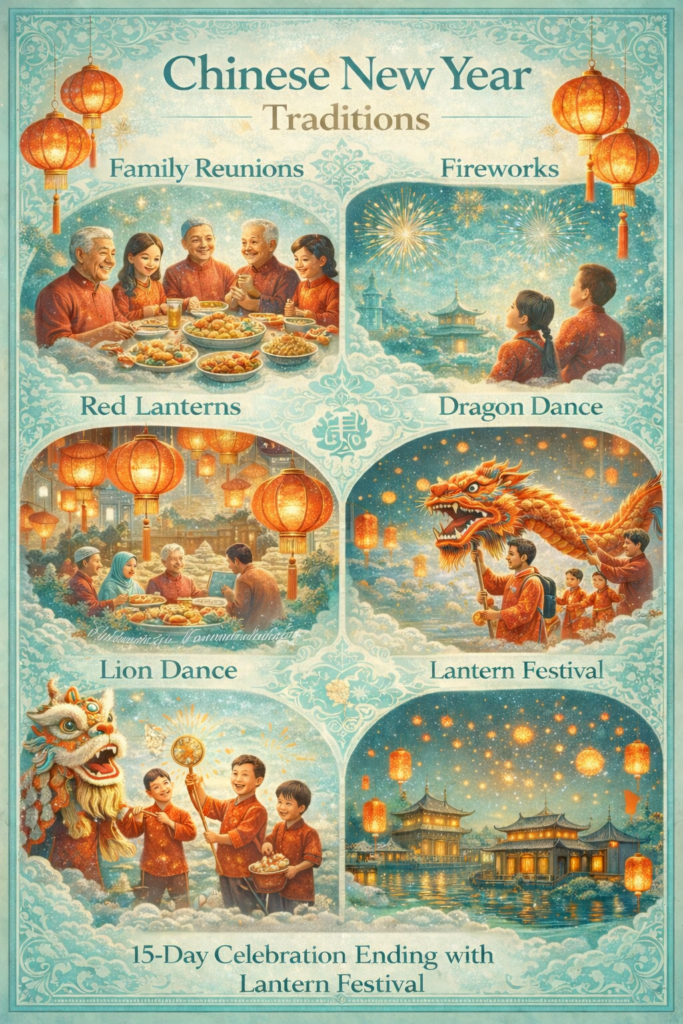
Chinese New Year is a festivity rooted in culture and family. Celebrations include family reunions, red lanterns, fireworks, lion and dragon dances, and sharing special meals to usher in luck and prosperity. The festival lasts about 15 days, starting on the first day of the lunar year and ending with the Lantern Festival.
Experiencing Both Together
For Muslims in China during this unique overlap, daily fasting and night prayers of Ramadan could coincide with the vibrant celebrations of Chinese New Year — family gatherings, community feasts in the evening, and cultural festivities. While the two traditions have different spiritual and cultural roots, the overlap creates a distinctive moment of shared community time and family focus.